(A Practical Guide to Prevent Risk, Delays, and Compliance Gaps)
If you’re a contractor or property manager, collecting a Certificate of Insurance (COI) isn’t just paperwork — it’s your first layer of risk protection.
Too often, teams collect a COI, glance at the expiration date, and file it away.
That’s not enough.
Below is a practical, field-tested COI checklist you can use before approving any vendor or subcontractor.
✅ What Is a COI?
Most COIs are issued on the ACORD 25 Certificate of Liability Insurance form.
It summarizes:
- Coverage types
- Policy numbers
- Effective and expiration dates
- Limits
- Named insured
- Certificate holder
⚠ Important: A COI is evidence of coverage, not the policy itself.
📋 COI Checklist for Contractors & Property Managers
Use this checklist before marking a vendor “compliant.”
1️⃣ Named Insured Verification
✔ Is the legal business name correct?
✔ Does it match your contract/vendor agreement?
✔ Is it an LLC, Inc., or DBA as expected?
Why this matters:
If the name doesn’t match the contract, coverage disputes can arise.
2️⃣ Policy Effective & Expiration Dates
✔ Are all policies currently active?
✔ Do the dates cover the full contract term?
✔ Are any policies expiring within 30–60 days?
Best Practice:
Start renewal requests 45 days before expiration to prevent gaps.
3️⃣ Required Coverages Present
Typical required coverages include:
- Commercial General Liability (CGL)
- Workers Compensation
- Commercial Auto Liability
- Umbrella / Excess Liability
- Professional Liability (if applicable)
- Cyber Liability (if applicable)
✔ Confirm each required coverage appears on the COI
✔ Confirm “occurrence” vs “claims-made” if relevant
4️⃣ Limits Meet Requirements
This is where many teams miss critical details.
Common minimum limits:
| Coverage | Typical Minimum |
| General Liability | $1M per occurrence / $2M aggregate |
| Workers Comp | Statutory |
| Employers Liability | $500K–$1M |
| Auto Liability | $1M combined single limit |
| Umbrella | $1M–$5M |
✔ Do per occurrence limits match your template?
✔ Does aggregate meet requirement?
✔ Does umbrella properly sit over primary policies?
If limits are short, document it clearly before approval.
5️⃣ Required Endorsements
Most contracts require:
- Additional Insured
- Waiver of Subrogation
- Primary & Non-Contributory
- Completed Operations (if construction-related)
✔ Are boxes checked on the COI?
✔ If required, request endorsement pages — not just certificate wording
✔ Confirm Additional Insured is issued on a proper endorsement form (CG 20 10, CG 20 37, etc.)
Important:
COI wording alone does not guarantee endorsement issuance.
6️⃣ Certificate Holder Information
✔ Is your company listed correctly?
✔ Is address correct?
✔ Are special contract requirements included in the description box?
If the certificate holder is wrong, request re-issuance immediately.
7️⃣ Description of Operations Section
This section often includes:
- Project name
- Property address
- Additional insured wording
- Contract references
✔ Does it reference your specific project?
✔ Is project-specific coverage required?
✔ Are multiple locations listed if needed?
8️⃣ Carrier Financial Rating
✔ Is the insurance carrier rated A- or better (if required)?
✔ Is it a recognized carrier?
For large property portfolios, carrier stability matters.
9️⃣ Watch for Red Flags
🚩 Handwritten modifications
🚩 Expiration dates very close to today
🚩 Missing policy numbers
🚩 Coverage marked “Claims Made” without retro date
🚩 COI issued by vendor instead of broker
🚩 Policy effective date after work has already started
These require clarification before approval.
🏗 Special Notes for Contractors
If you are a general contractor:
- Require COIs from every subcontractor
- Track policies individually
- Tie compliance to job site access
- Re-verify coverage before final payment release
Many construction claims arise from uninsured subcontractors.
🏢 Special Notes for Property Managers
If you manage:
- Multi-family properties
- Commercial buildings
- Retail centers
- HOAs
Ensure:
- Vendors working on-site carry Workers Comp
- Landscaping, roofing, HVAC, and electricians carry proper GL + Auto
- Snow removal vendors have adequate umbrella coverage
- Tenant improvement contractors meet property insurance standards
📊 Pro Tip: Don’t Just Collect — Track
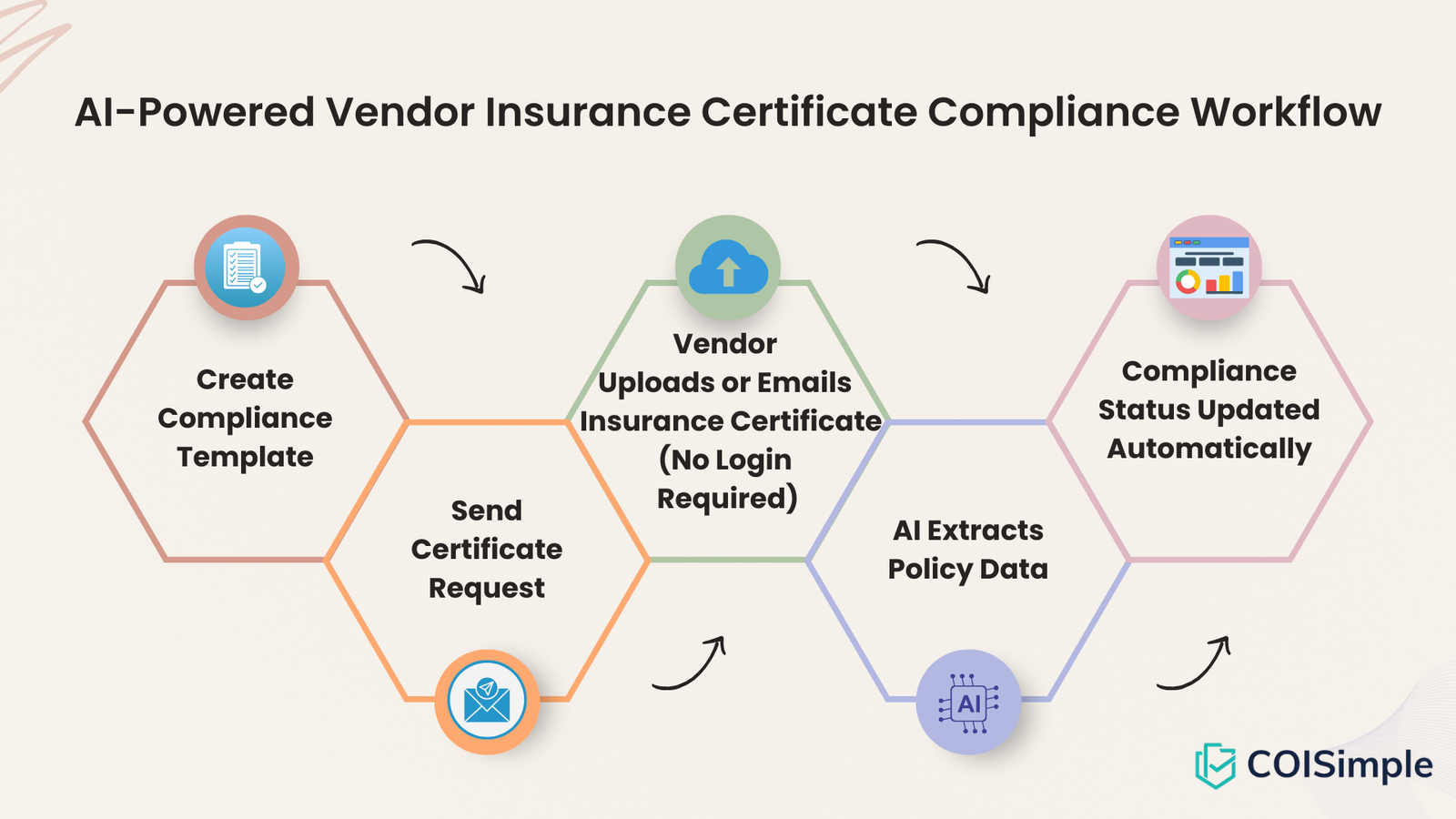
Collecting a COI is step one.
Tracking expiration, renewal, and compliance status is step two.
To reduce risk:
- Store policies individually
- Automate renewal reminders
- Document exceptions
- Keep an audit trail of approvals
Final Thoughts
A strong COI checklist protects:
- Your business
- Your property
- Your investors
- Your clients
COIs should not be treated as a checkbox exercise.
They are a risk management control system.
If you use this checklist consistently, you’ll:
- Reduce renewal chasing
- Prevent coverage gaps
- Avoid uninsured claims
- Strengthen contract enforcement
And most importantly — you’ll sleep better knowing your vendors are properly insured.