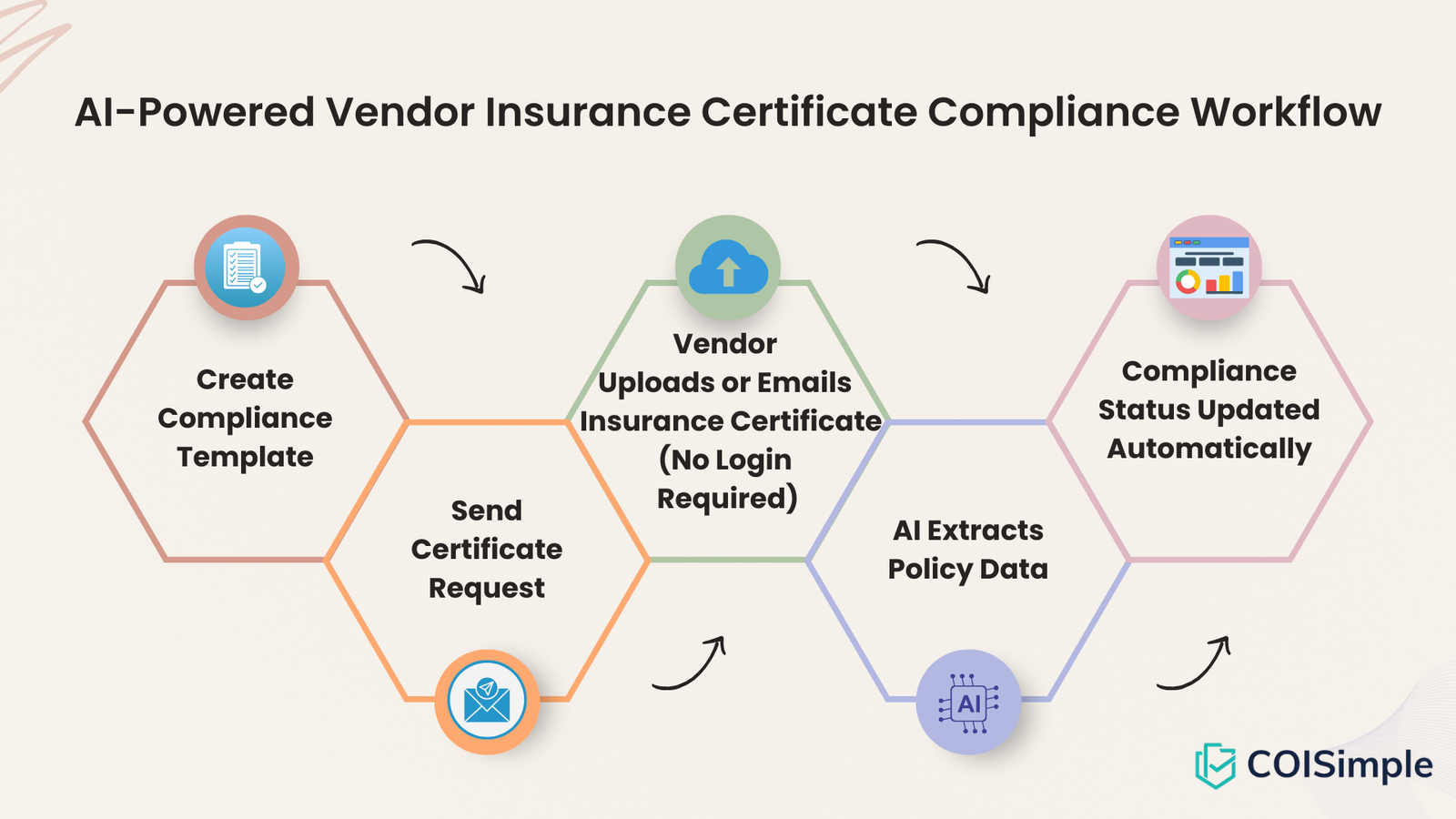
If you manage vendors — especially in property management, construction, real estate, or facilities operations — you already know the pain:
- 📧 Endless reminder emails
- 📞 “We’re waiting on our agent” excuses
- 📊 Spreadsheets that don’t match reality
- ⏰ Policies that expire before you notice
COI renewal chasing is not just annoying — it’s a risk exposure problem.
Let’s break down how to systematically reduce renewal chasing and move toward a proactive, controlled compliance process.
1️⃣ Understand Why COI Renewal Chasing Happens
Most companies chase renewals because:
- Expiration tracking lives in Excel
- There’s no automated alert system
- Vendors upload certificates late
- No one clearly “owns” compliance
- Renewal requests are reactive, not scheduled
In many organizations, the process looks like this:
Policy expires → Someone notices → Email vendor → Follow up 3 times → Escalate → Finally receive COI.
That’s not a system. That’s firefighting.
2️⃣ Move from Reactive to Scheduled Renewals
The biggest shift you can make:
❌ Old Way
Wait until expiration date to request renewal.
✅ Better Way
Automatically request renewal 30–45 days before expiration.
Why?
- Vendors need time to coordinate with their broker.
- Carriers often issue renewals within 30 days of expiration.
- You avoid coverage gaps.
Best practice timeline:
| Days Before Expiration | Action |
| 60 days | Internal visibility alert |
| 45 days | First vendor renewal request |
| 30 days | Second reminder |
| 15 days | Escalation notice |
| 0 days | Mark non-compliant if not received |
This eliminates last-minute scrambling.
3️⃣ Track Policies Individually (Not Just Vendors)
One major mistake:
Tracking “Vendor Status” instead of tracking individual policies.
Each vendor may have:
- General Liability
- Workers Compensation
- Auto Liability
- Umbrella / Excess
- Professional Liability
Each policy has:
- Different expiration dates
- Different limits
- Different endorsement requirements
If you only track vendor-level compliance, you’ll miss expiring policies.
Instead:
- Store each policy separately
- Track expiration by coverage type
- Trigger renewal workflows per coverage
This drastically reduces confusion.
4️⃣ Standardize Your Requirements
Renewal chaos increases when:
- Requirements change mid-year
- Templates are unclear
- Vendors don’t know what endorsements are needed
To reduce chasing:
- Create clear insurance templates by vendor type
- Define required limits
- List required endorsements (Additional Insured, Waiver of Subrogation, etc.)
- Include renewal instructions in every request
When vendors know exactly what to provide, follow-ups drop significantly.
5️⃣ Automate Reminders (Don’t Manually Email)
Manual email follow-ups are not scalable.
Instead:
- Use automated email reminders
- Include the exact missing coverage in the message
- Add upload links directly in the email
- Track open status (if possible)
Even simple automation can reduce renewal chasing by 50–70%.
For SMBs managing 50–300 vendors, automation often replaces hours of admin work each week.
6️⃣ Separate Renewal from Evaluation
Another common mistake:
Treating renewal and evaluation as the same thing.
They’re different.
Renewal = expiration management
Evaluation = compliance review against requirements
If a vendor was marked non-compliant or granted an exception previously, you should still:
- Track expiration
- Request updated certificate
- Re-evaluate against template when new COI arrives
This prevents policies from silently expiring after an exception decision.
7️⃣ Give Vendors a Self-Service Upload Portal
The faster vendors can upload, the faster renewals close.
A vendor portal should:
- Show expiring policies
- Allow direct certificate upload
- Display what’s missing
- Show compliance status
When vendors can see their own status, follow-up emails drop significantly.
8️⃣ Measure These 3 Metrics
If you want real control, track:
- % Policies Renewed Before Expiration
- Average Days Late
- Open Expirations Over 30 Days
Once you start measuring, chasing naturally decreases because the process becomes visible.
Final Thoughts
COI renewal chasing is not a vendor problem — it’s a process design problem.
If you:
- Track policies individually
- Request renewals early
- Standardize templates
- Automate reminders
- Separate renewal from evaluation
- Offer self-service uploads
You move from chasing to controlling compliance.
And that’s where risk exposure drops dramatically.
If you’re building or evaluating a COI tracking system, the question isn’t:
“How do we chase better?”
It’s:
“How do we eliminate the need to chase at all?”